
01Understand Before Building
Before I recommend a stack or sketch an architecture, I need to know what success looks like for the business — not just the next sprint. Context determines every recommendation.
For founders
I partner with early-stage teams on architecture, trade-offs, and delivery. The goal is always the same: leave you with systems your team can maintain and decisions they can explain — not work that only makes sense while I'm involved.
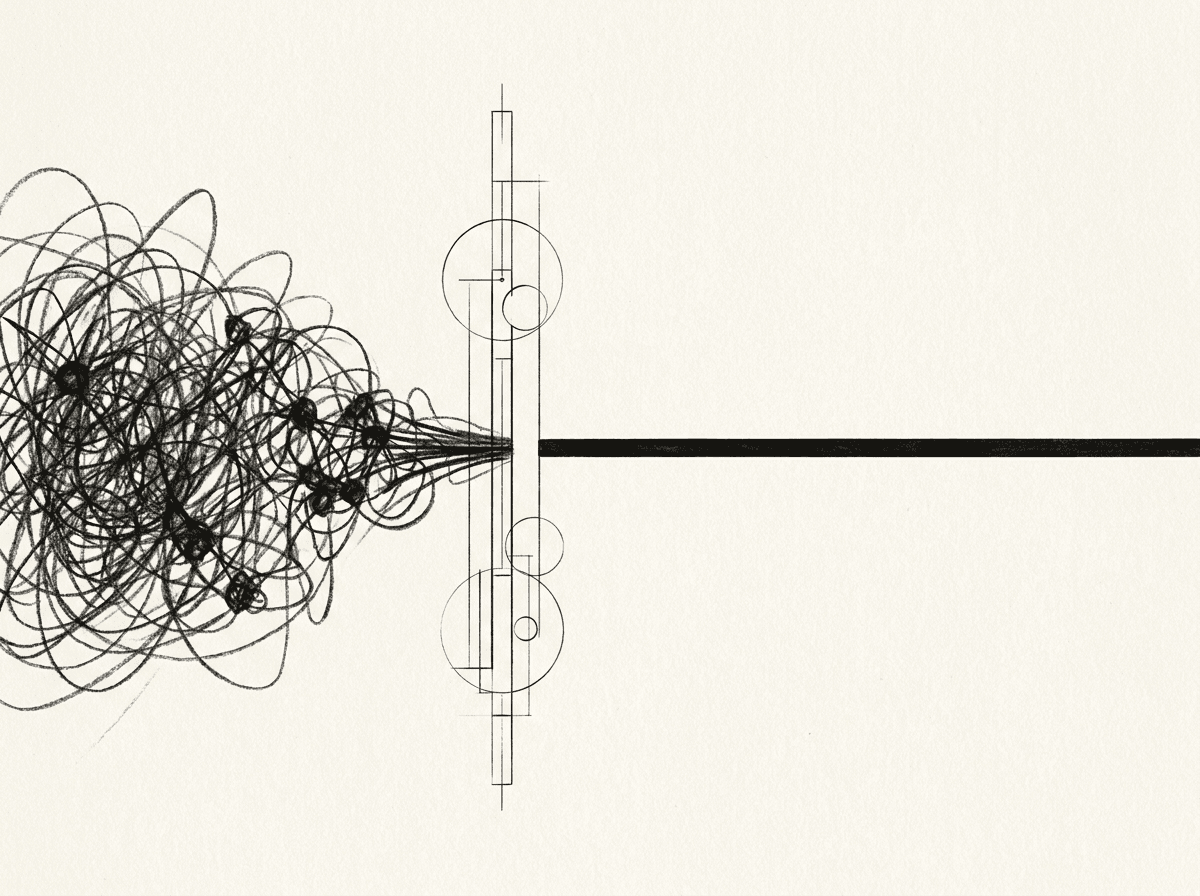
“The hardest part usually isn't writing code — it's deciding what not to build. I start with the business question, then work backward to the smallest technical answer that fits.”
— Ayush
[01]
The same pattern keeps coming up: understand the business problem before committing to a stack. These three habits shape how I approach every engagement.
01Understand Before Building
Before I recommend a stack or sketch an architecture, I need to know what success looks like for the business — not just the next sprint. Context determines every recommendation.
02Spend Where You're Different
Commodity problems — auth, billing, notifications — rarely deserve custom engineering. I'd rather buy proven tools for those and spend budget where the product actually competes.
03Build for Who Inherits It
Whoever maintains the codebase next won't have today's context. I'd rather spend an extra day reducing future maintenance than save a few hours now and leave them guessing.
[02]
Most product decisions carry a cost that only shows up later. I help name that cost upfront — so you're choosing with context, not finding out after the fact.
How fast you ship now versus what you'll pay to fix it later.
Common Mistake
Pausing product work for a full rewrite because the codebase feels messy.
Better Approach
Keep shipping while refactoring only the paths that actually block you. Everything else can wait until there's a clear reason to touch it.
When to hire, when to contract, and how to avoid both mistakes.
Common Mistake
Hiring several engineers before the product direction is clear — then spending more time managing than learning.
Better Approach
Set architecture and delivery patterns first — whether through a technical partner or a first strong hire — then grow the team when the direction is clearer.
Where custom engineering earns its cost — and where it doesn't.
Common Mistake
Building auth, billing, or notifications from scratch because the tutorial looks straightforward.
Better Approach
Buy commodity infrastructure. Build only what customers pay you for — and wrap both behind interfaces so you can swap vendors without rewriting the core.